Why enterprises should stop automating isolated tasks
Digital transformation has traditionally focused on systems, applications and individual activities. Automate an approval. Digitise a form. Add a chatbot. Automate data entry. Introduce document processing. Deploy an AI assistant.
Each initiative can create value. But business outcomes rarely happen inside a single task. They happen across a chain of connected activities.
The next phase of enterprise transformation should treat the workflow—not the task—as the fundamental unit of transformation.
A task is not a business outcome
Imagine a buyer sends an inquiry to a manufacturing company. The organisation may need to capture the inquiry, understand requirements, identify the buyer, check buyer and product information, check ERP records, identify missing information, communicate with the buyer, validate order details, obtain approval, update the ERP and confirm the order.
Which one of these steps is the transformation? None individually. The transformation is the entire workflow.
The workflow is where value is created
A workflow connects Input → Understanding → Decision → Action → Verification → Outcome.
If AI extracts an invoice but does not match, reconcile, route exceptions, obtain approval and update the ERP, the enterprise has automated a task—not transformed the workflow.
From Task Automation to Workflow Transformation
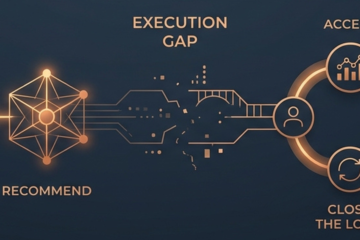
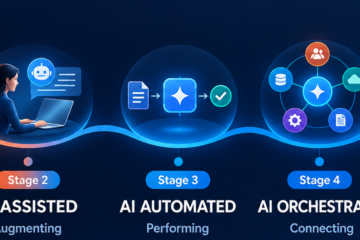
Traditional automation: Human Task → Automation → Faster Task. Emerging enterprise AI: Business Outcome → Workflow → AI + Systems + People → Execution.
Customer service as a workflow
Customer Message → Message Capture → Identity & Context → Request Classification → Knowledge Retrieval → Customer/Order Data Retrieval → AI Response or Action Recommendation → Human Approval if Required → Customer Response → CRM/Service Record Update → Verification → Close the Loop.
This is the difference between a chatbot and an omnichannel customer-service execution workflow.
How organisations should identify AI opportunities
Instead of asking, “What AI tool do you want?”, ask: “Which business workflow creates the most friction, cost, delay or risk?” Then map it.
- Inputs — What starts the process?
- Understanding — What information must be interpreted?
- Decisions — What decisions must be made?
- Systems — Which enterprise systems contain the required information?
- Human involvement — Where is approval or judgement required?
- Actions — What needs to happen after the decision?
- Verification — How do we know the action was correct?
- Exceptions — What happens when the normal workflow breaks?
Examples across the enterprise
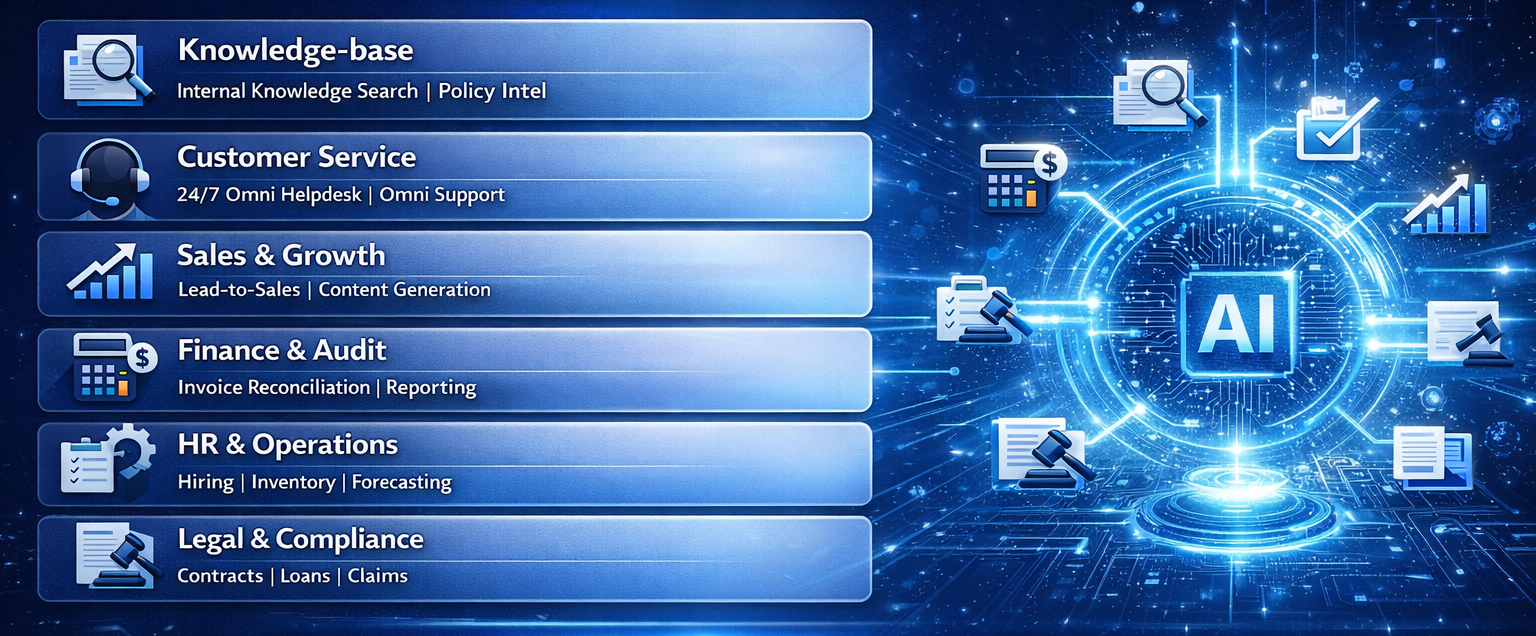
Procurement: Request → Supplier Search → Quote Comparison → Policy Check → Approval → Purchase Order → ERP Update.
Inventory: Demand Signal → Forecast → Inventory Check → Reorder Recommendation → Approval → Supplier Order → ERP Update.
Finance: Invoice → Extraction → Matching → Reconciliation → Exception → Approval → Payment → Accounting Record.
HR: Job Requirement → CV Intake → Parsing → Matching → Ranking → Human Review → Interview → Hiring.
Sales: Lead → Enrichment → ICP Scoring → Personalisation → Outreach → Response → Qualification → Meeting.
Legal: Contract → Extraction → Clause Analysis → Risk Identification → Policy Comparison → Recommendation → Approval → Execution.
The role of NexZ
NexZ’s Enterprise Execution Platform can bring together enterprise knowledge, AI reasoning, enterprise applications, people, workflow orchestration, approvals, actions, verification and governance.
The unit of transformation is therefore no longer the application, the department, the form, the approval or the data-entry step. It is the workflow.